PRODUCT
Eco-friendly Energy Material for Electrolysis
A core component material for polymer electrolyte membrane (PEM) electrolysis
- Titanium Porous Transport Layer (PTL)
- PEMEC Anode Porous Transport Layer
In polymer electrolyte membrane electrolysis cells (PEMEC), the porous transport layer (PTL) is a core component that determines hydrogen production efficiency and system durability.
In addition to its primary function of water transport, the PTL performs a number of functions to achieve electrical conductivity and structural stability.
- Product Features
- Optimized porous design engineered for excellent water management
- Excellent corrosion resistance
- Consistent pore structure
- Excellent mechanical rigidity
- Surface light control for an increased area of membrane contact
- Manufacturing Process
- Sintering technology is used to heat metal powders to a temperature below their melting point to combine their particles to achieve a strong porous structure.

Materials mixing

Casting

Debinding

Sintering

Pt Coating

Trimming
※ All processes completed in-house
- Competitiveness
- Domestically sourced titanium and ultra-precision processing technology are the key strengths behind Shinsung C&T's porous transport layer (PTL).
| Technical Competitiveness | Industrial Competitiveness | ||
|---|---|---|---|
| Titanium processing technology | Uniformity of porosity | Positioning in the value chain | Market growth |
| Shinsung C&T’s experience with display materials and processing technology is carried over into the precision processing, sintering, and surface finishing of PTLs. | In-house manufacturing and analysis facilities enable the sintering technology to achieve optimal porous structures of high density and low resistance. | A core component of the PEM electrolysis cell, suppliers of PTLs are limited because of barriers in production cost and technology. | With the electrolytic cell as a core technology for today’s mass production of green hydrogen, the market for PTLs is growing fast. |
- PTL Technical Data
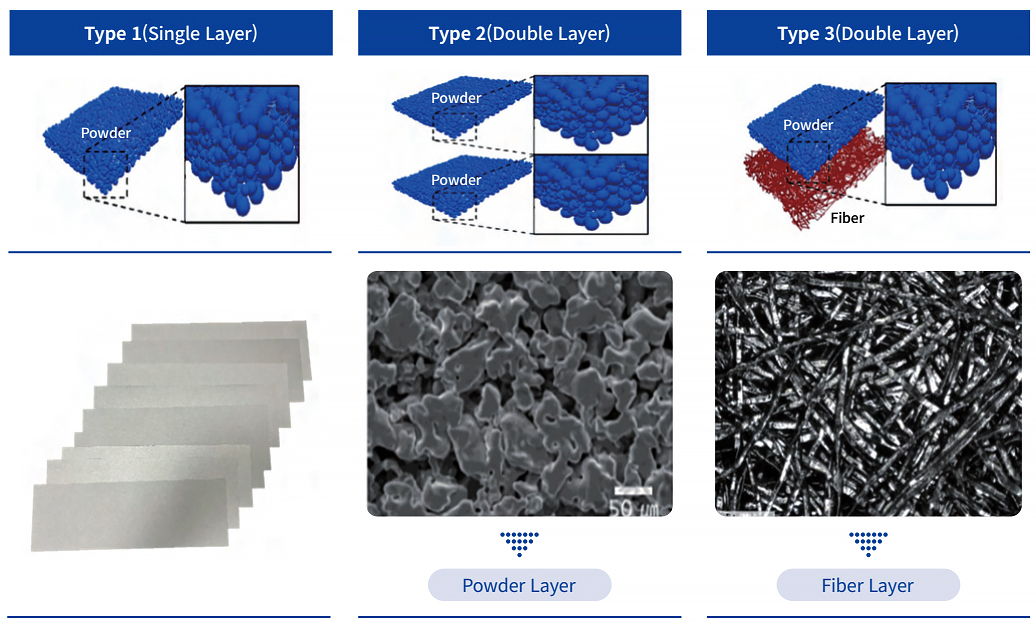
| Typical Properties | Unit | Value | Remark |
|---|---|---|---|
| Thickness | ㎛ | 160, 260, etc | ASTM D 3652 |
| porosity | % | 40 | Shinsungcnt method |
| Surface roughness | ㎛ | Sa 3.0 | Shinsungcnt method |
※ Customization possible according to customer’s requirements.e
- Surface
| Surface | High Profile | Contact Area |
|---|---|---|
| 40x magnification | Red : High, Blue : Low | Red : Contact, Gray : Non-Contact |
※ Contact Area : Potential Consideration of membrane expansion
In a PEM (polymer electrolyte membrane) water electrolysis cell, the electrolyte membrane
expands as it absorbs water during operation.
- Performance and Durability
I-V Curve
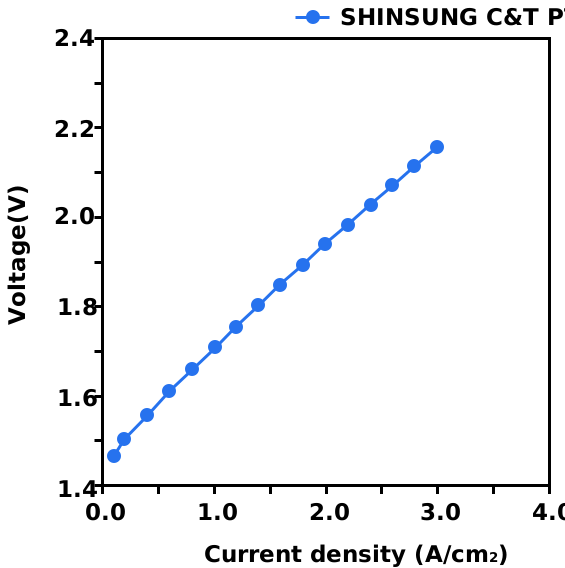
Durability

- Test Condition
- Size = 25㎠
- Temp.=65℃
- Membrane=Nafion 115(127㎛)
- Anode= PTL (IrO2)
- Cathode = GDL(Pt/C)
- Vision and Roadmap
Growth into a global hydrogen technology leader
- Development of new technology that creates high added value and satisfies market needs
- Establishment of a mass production system to meet growing hydrogen commerce demands
- Pioneering of new global markets
Stage 1
2021-2023
- Base technology
- development R&D
Stage 2
2023-2025
- Investment in and validation of mass production lines
Stage 3
2026-
- Investment in mass production facilities
- Next-generation PTL development
Stage 4
2030-
- Establishment of additional production bases
- Increases in supply